FL-GW-SS
Steel Shell Induction Melting Furnace
Fully welded steel-shell furnace with magnetic yoke and hydraulic 95° tilting, from 0.5 to 5 tons per body — the standard choice for continuous foundry melting.
Read More →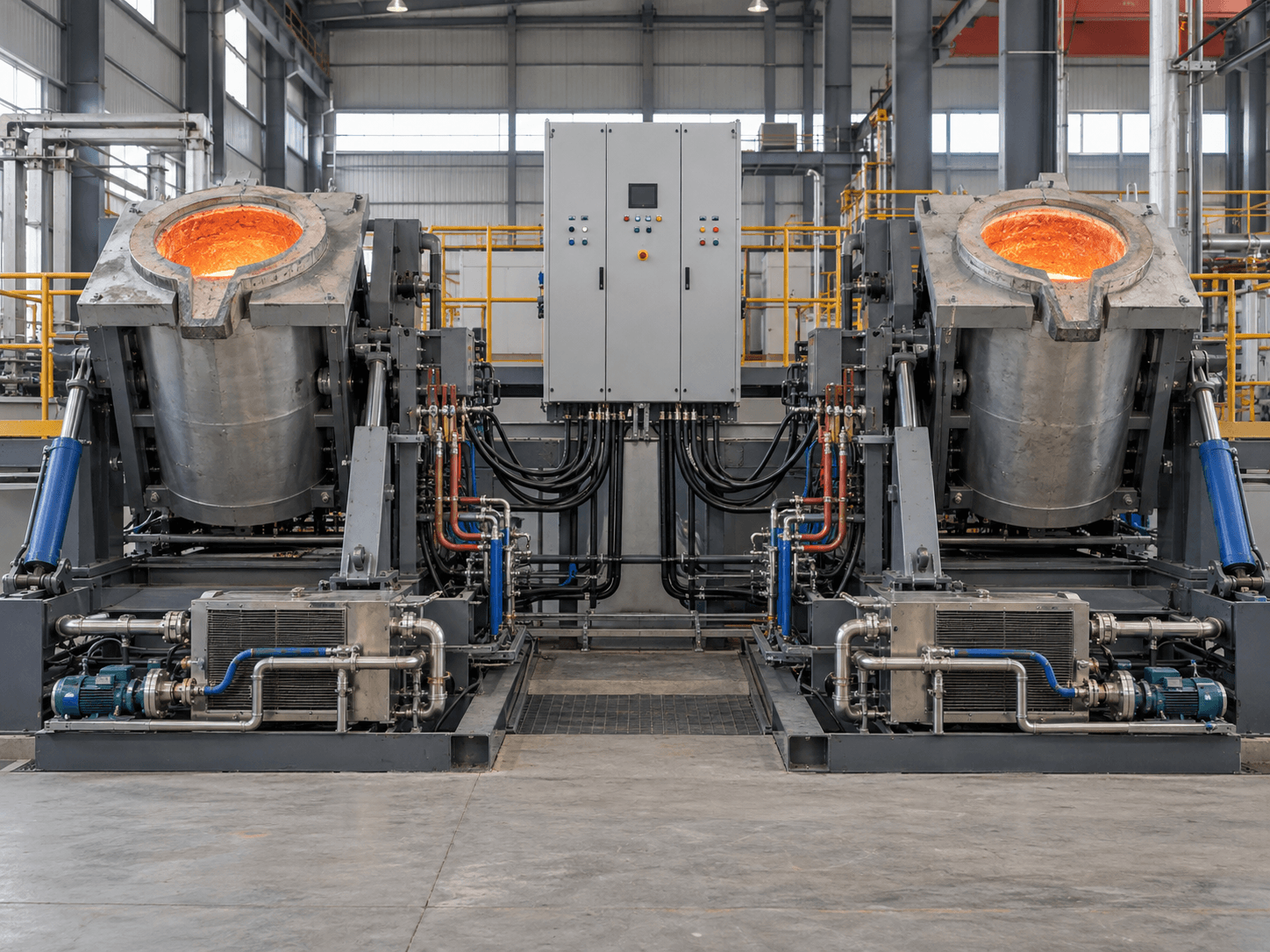
Induction heating manufacturer since 1998 · Built to your grid voltage · Installation & commissioning worldwide
Induction heating manufacturer since 1998 · Weifang, China
GTR forging heating furnaces, induction quenching & tempering lines, KGPS and IGBT power supplies, melting furnaces from 50 kg to 5 tons and vacuum furnaces — engineered to your alloy, your output and your grid voltage, then installed and commissioned by our own engineers on your floor.
Since 1998
Induction heating manufacturing
20,000 m²
Manufacturing facility, Weifang
160 Staff
Including 50+ senior engineers
50 kg – 5 T
Furnace capacity, larger to order
Five equipment families covering the full induction chain — melting, power conversion, heating, vacuum processing and the auxiliary equipment that keeps them running.
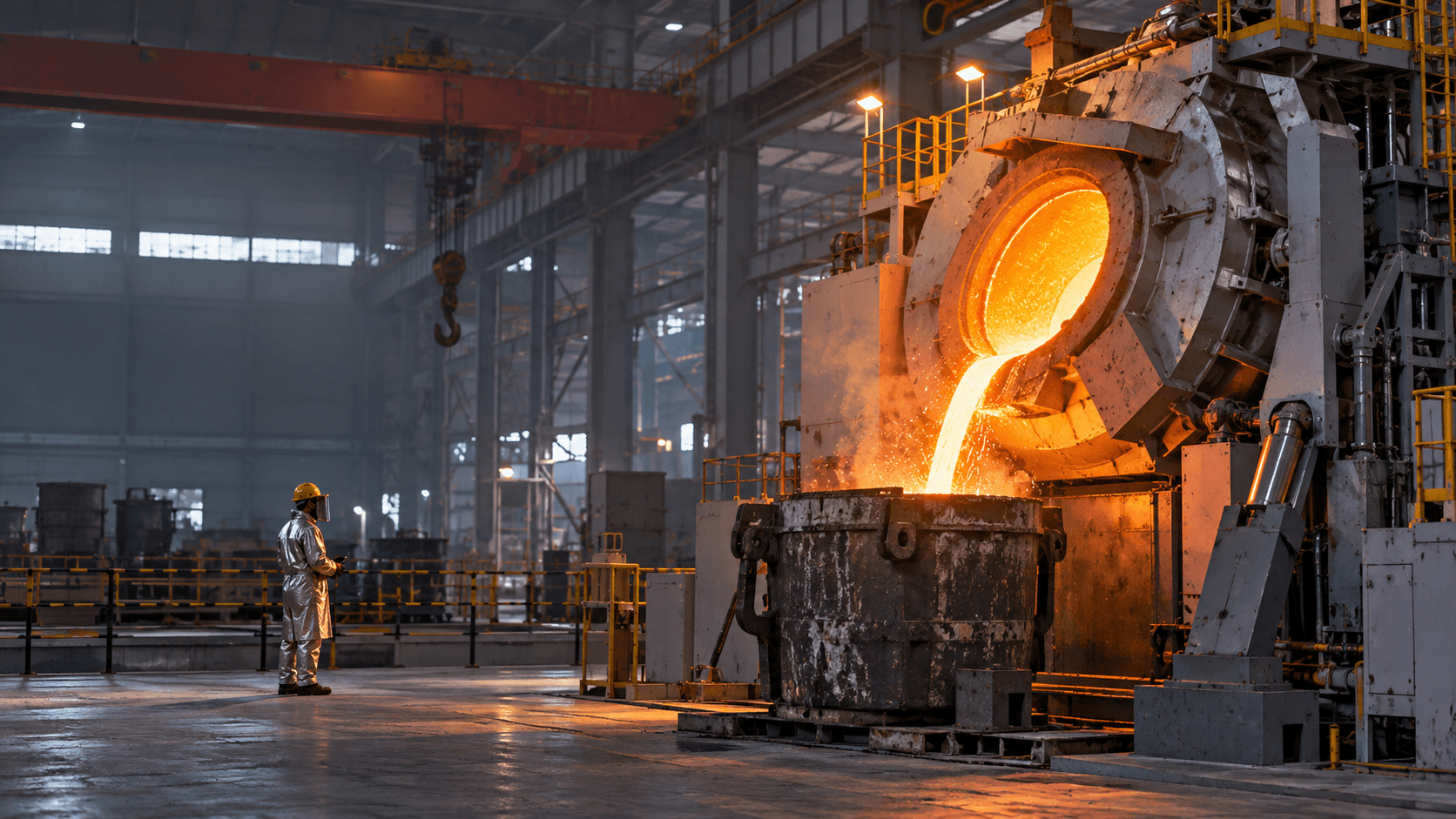
Coreless induction melting furnaces for steel, iron, copper and aluminium — steel-shell, aluminium-shell and dual-track, with hydraulic 95° tilting.
7 product lines →KGPS thyristor parallel-resonance and IGBT series-resonance inverters from 100 kW to 2,500 kW, with constant-power tracking and full protection. Larger ratings built to order.
3 product lines →Through-heating and surface-hardening lines for billets, bars, tubes and finished parts, with closed-loop temperature control and automatic handling.
5 product lines →Vacuum and controlled-atmosphere furnaces to 3,000 °C for superalloys, hard metals, graphite purification and advanced ceramics.
4 product lines →The supporting equipment and consumables that decide furnace uptime — cooling towers, hydraulic stations, water-cooled cables, capacitors and refractory linings.
4 product lines →Two furnace bodies share one power supply through an interlocked switching cabinet. You melt on one body while the other is relined, cooled or held on standby — changeover takes under two minutes. For a foundry running two or three shifts, the recovered production usually repays the difference inside the first year.
See the ConfigurationThe four systems overseas buyers ask about most. Every page carries full model tables, specifications and lead times.
FL-GW-SS
Fully welded steel-shell furnace with magnetic yoke and hydraulic 95° tilting, from 0.5 to 5 tons per body — the standard choice for continuous foundry melting.
Read More →FL-KGPS
Rugged SCR parallel-resonance inverter, 100–2,500 kW, built for continuous foundry melting and tolerant of weak or noisy grids. Larger ratings built to order.
Read More →FL-IH-BIL
GTR series through-heating line for round and square billets, with pyrometer control, hot and cold reject gates and press synchronisation.
Read More →FL-VIM
Melting and casting under vacuum or inert atmosphere from 5 kg to 2 tons, for nickel superalloys, titanium alloys, magnetic alloys and clean specialty steels.
Read More →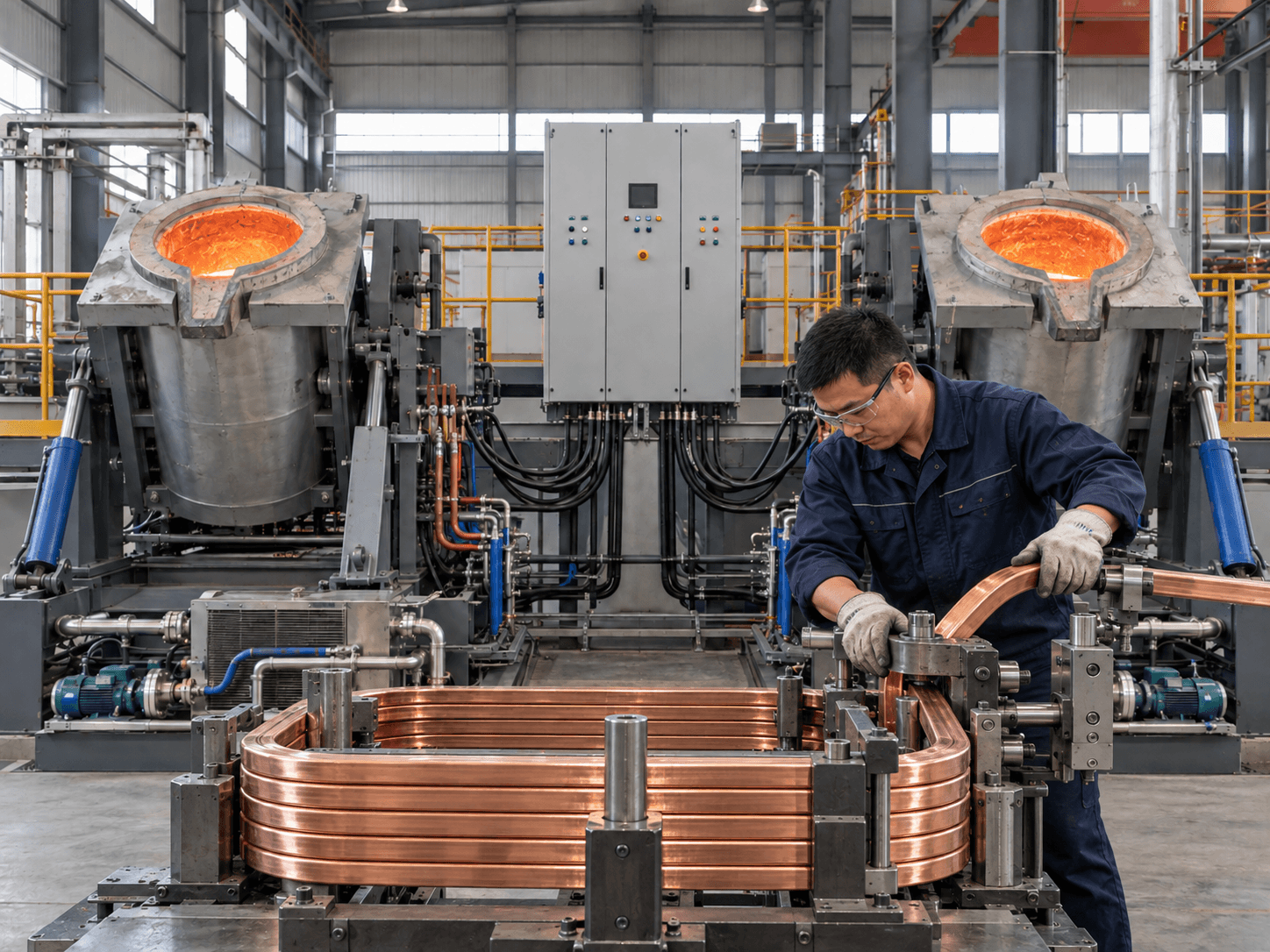
Eleven industries, each with a different constraint — relining downtime, metal loss, case-depth repeatability, batch traceability. Select yours to see what we specify and why.
Coreless melting furnaces from 0.5 to 5 tons per body for grey iron, ductile iron, carbon and alloy steel castings, configured for continuous three-shift production.
Read MoreMelting plants for scrap processors converting mixed feed into saleable ingot or billet, with charge handling and fume extraction sized to the operation.
Read MoreThrough-heating and end-heating lines synchronised to your press, with automatic reject gates, quick coil changeover and low scale loss.
Read MoreMelting, forging heat and induction hardening with per-part data logging — built for automotive traceability and PPAP-level process control.
Read MoreMelting and holding furnaces for aluminium, zinc and light alloys, with low metal loss, gentle stirring and ±5 °C holding for die-casting cells.
Read MoreMelting furnaces for copper rod and billet casting, brass valve and fitting foundries and bronze bushing production, with zinc-vapour extraction.
Read MoreMelting furnaces and continuous induction reheating lines for billet, rebar and section rolling operations, sized to your caster and mill throughput.
Read MoreSurface hardening, tempering, normalising and stress relieving with recipe control and full process data — for job shops and in-house treatment lines.
Read MoreSmall and medium furnaces with fast heat-up and tight temperature control for shell casting of stainless steel, superalloys and precision components.
Read MorePurification, sintering and hot-press equipment to 3,000 °C for battery anode graphite, tungsten carbide, technical ceramics and sputtering targets.
Read MoreSmall-scale melting, sintering and vacuum equipment with programmable recipes and data logging, for universities, research institutes and alloy development labs.
Read MoreForgeLink Induction Systems has manufactured medium frequency induction melting and heating equipment in Weifang, Shandong Province since 1998. Furnace bodies, coils, hydraulic systems and power supply cabinets are all built in our own works, and every system is assembled and run on load before it is dismantled for shipment.
Export contracts, documentation, logistics and overseas after-sales are handled together with Shanghai Linkster International Trade Co., Ltd., so an international buyer deals with one English-speaking team from enquiry through to commissioning and spare parts.
Importing a melting plant is a project, not a purchase. These six commitments are written into every export contract we sign.
Voltage and frequency are specified at order — 380 V/50 Hz, 400 V/50 Hz, 415 V/50 Hz, 440 V/60 Hz or 480 V/60 Hz — with the matching rectifier transformer where required. No on-site improvisation.
The complete system is assembled and run on load in our works. You receive the test report, and you or your appointed inspector are welcome to witness it.
Fumigated timber crating with moisture barriers and desiccant, a container loading plan, and the complete document set: invoice, packing list, bill of lading, certificate of origin and insurance.
Our engineers travel to your plant, supervise installation, install and sinter the first lining, commission on your own charge material and stay until the plant produces to specification.
Charging practice, melting procedure, lining monitoring, routine maintenance and fault diagnosis, delivered on your equipment with an English manual your team keeps.
A two-year spares kit is priced in the original quotation, and every part is cross-referenced to your machine serial number so a later order is a part number, not a photograph.
A six-step project process with one named engineer accountable from the technical brief through to operator training.
We collect your alloy, target output per hour, working hours per day, grid voltage and frequency, and available floor space. Nothing is quoted until those six answers are on paper.
Our engineers return a furnace capacity and power recommendation, a plant layout drawing, a transformer and cable schedule and a cooling-water heat balance — normally within 3 working days.
A line-by-line scope: what is included, what is by others, what the two-year spares kit costs. Payment terms, Incoterms and delivery are fixed at this stage, not negotiated later.
Build progress is reported with photographs at defined milestones. Before shipment the complete system is assembled and run on load in our own works, and you or your inspector are welcome to attend.
Seaworthy packing with fumigated timber, moisture barriers and desiccant. We handle the container plan, export declaration, certificate of origin and full document set for your customs clearance.
Our engineers travel to your site to supervise installation, install and sinter the first lining, commission the system on your own charge material and train your operators and maintenance team.
Alloy, target output per hour, working hours per day and your grid voltage are enough for us to come back with a capacity recommendation, a plant layout and a firm quotation — normally within three working days.
Engineering answers, not a price list
Sizing guides, technology comparisons and operating practice from our engineering team — written to be useful whether or not you buy from us.
Buyer Guide
The sizing mistake that costs foundries the most money is buying the furnace they can afford instead of the one their pouring cycle needs. Here is how to work it out.
Technology
IGBT is newer, but newer is not the same as better for every duty. A practical comparison of thyristor and IGBT medium frequency power supplies for buyers.
Operation
Lining life varies enormously between foundries running identical furnaces. Almost all of the difference is installation practice and the sintering curve.
Cost & Energy
Suppliers quote consumption figures under laboratory conditions. Here is what moves the number in a real foundry, and where the savings actually are.